Zusammenfassung ist AI-generiert, newsroom-reviewed.
Die NFL-Trade-Deadline 2026 endet am Dienstag, 10. November, um 22 Uhr MEZ. Bereits für Schlagzeilen sorgten Jeffery Simmons’ Wechsel zu den Bears, Quenton Nelsons Transfer zu den Seahawks und DeForest Buckners Rückkehr zu den 49ers. Bis zum Fristende können die Teams ihre Kader weiter mit Spielern und Draft-Picks verändern.
Lies den Artikel, um mehr über die folgenden Aspekte zu erfahren:
- Ablauf von Trades sowie Bedeutung von Draft-Picks und Salary Cap
- Unterschiede zwischen Käufern und Verkäufern am Trade-Markt
- Weitere bereits vollzogene Spielerwechsel
The NFL trade market is heating up. While some teams are looking to make targeted additions, others are taking the opportunity to trade experienced players for valuable draft picks.
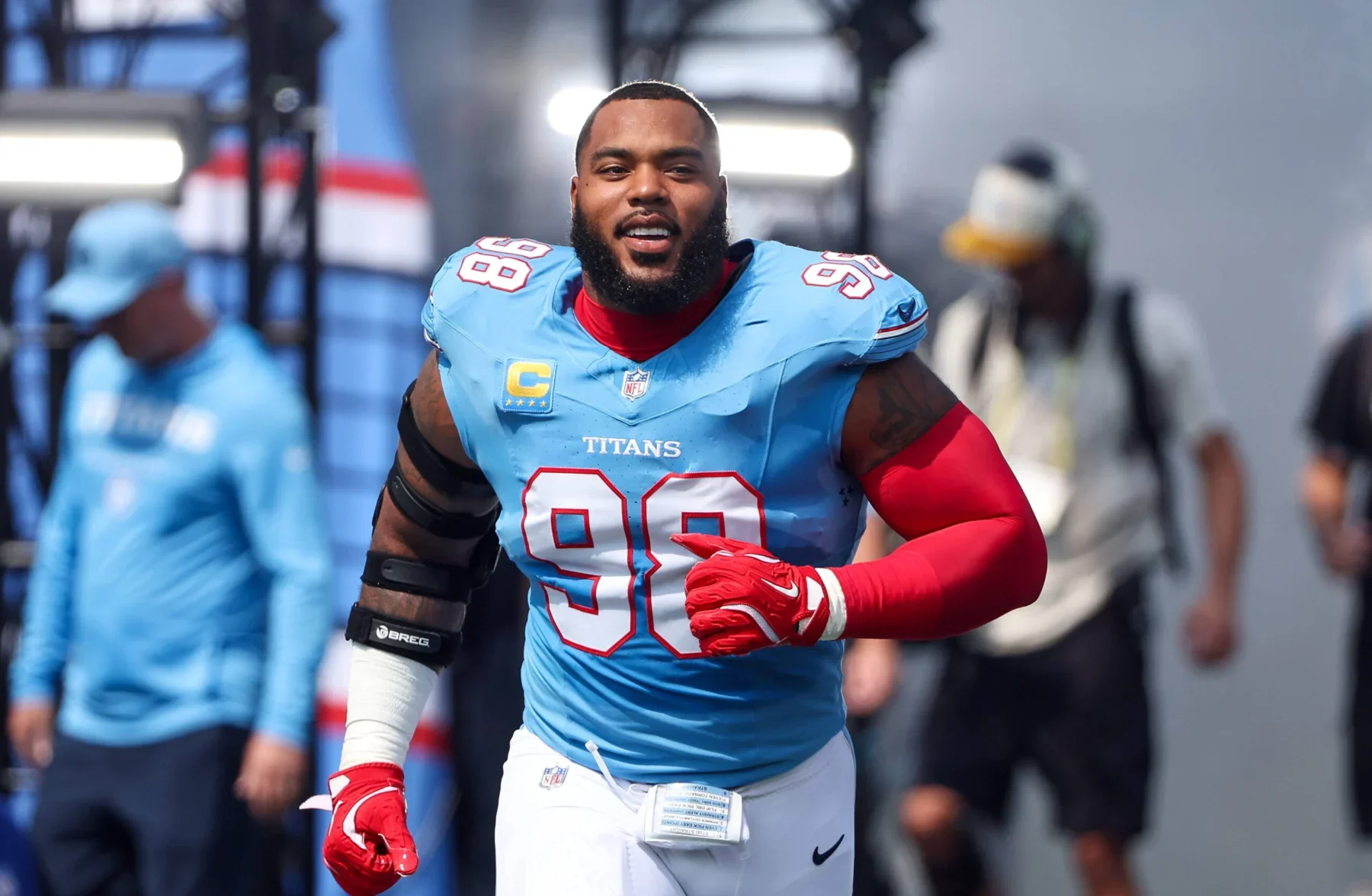
The trades sending Jeffery Simmons to the Chicago Bears, Quenton Nelson to the Seattle Seahawks, and DeForest Buckner to the San Francisco 49ers made headlines in late October.
And that could just be the beginning. The 32 franchises still have time to reshape their rosters before the NFL trade deadline.
When is the 2026 NFL trade deadline?
The 2026 NFL trade deadline is Tuesday, November 10, at 10:00 p.m. CET. In the United States, the deadline is 4:00 p.m. Eastern Time.

That puts the deadline on the Tuesday after Week 9 of the regular season. Until then, NFL teams can trade players and draft picks with one another. The transactions must be submitted to the league on time.
Since the 2024 season, the trade deadline has fallen a week later than it did previously. That year, NFL team owners voted to move the deadline to after the ninth week of the season. The change was made in part because the regular season had been expanded to 17 games.
The extra week gives team decision-makers more time to evaluate their rosters. Teams with an even record, in particular, can wait longer before deciding whether to add reinforcements or move players.
Once the deadline passes, trades between NFL teams are no longer allowed. The opportunity opens again only when the new league year begins in March.
Important: The trade deadline does not mean teams can no longer sign any players. Free agents and players released by their teams are subject to different rules.
How do trades work in the NFL?
Unlike in European soccer, NFL players are not usually sold for traditional transfer fees. Instead, franchises negotiate trades.
Players can be traded for other players, future draft picks, or a combination of the two.
Here’s a simple example: A team with playoff aspirations urgently needs an experienced wide receiver. Another franchise is in the middle of a rebuild and is willing to part with a key player.
Rather than pay a transfer fee, the interested team might offer a second-round pick in the upcoming NFL Draft. If both sides agree and all requirements are met, the trade can be completed.
Early-round draft picks are particularly valuable. They give teams the opportunity to sign young talent to relatively inexpensive rookie contracts.
That makes a first-round pick an important investment in the future. The better the player and the more urgent the need on the trade market, the higher the asking price can be.
Draft picks can also be subject to certain conditions. These so-called conditional picks can change in value depending, for example, on agreed-upon performance or playing-time benchmarks.
The salary cap, or the NFL’s spending limit, is another important factor.
A team cannot sign an unlimited number of players with large contracts. Any trade has to account for which salary obligations the acquiring team takes on and which contract amounts already paid by the player’s former team count against its salary cap as so-called “dead money.”
That can make some seemingly straightforward trades much more complicated.
Why teams are buyers or sellers
Two terms come up frequently around the trade deadline: buyers and sellers.
Buyers are teams looking to add reinforcements. They are usually teams with realistic playoff hopes that want to address a weakness ahead of a potential Super Bowl run.
Sellers, on the other hand, are focused more on the long term. They trade players to acquire additional draft picks, reduce salary costs, or move forward with a rebuild.
However, selling does not automatically mean a franchise has given up on its season. Sometimes, a team is simply looking to turn an expiring contract into something of value.
2026 NFL trades: These blockbuster deals are already done
The deals already completed show why the 2026 trade deadline could be especially interesting.
The most headline-grabbing trade so far was completed by the Chicago Bears and Tennessee Titans on October 29.
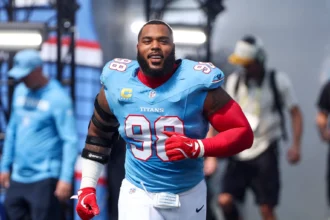
Chicago acquired All-Pro defensive tackle Jeffery Simmons and also received a fifth-round pick in 2028. In return, Tennessee landed two first-round picks, in 2027 and 2028, as well as a fourth-round pick in 2027.
The Bears are clearly prioritizing immediate success, while the Titans are stockpiling valuable draft capital for the future.
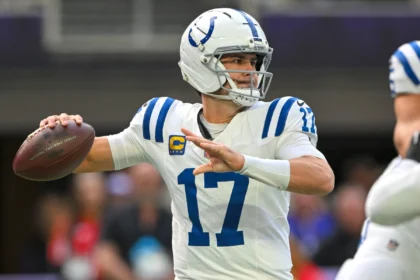
The Indianapolis Colts have also made a major impact on the trade market.
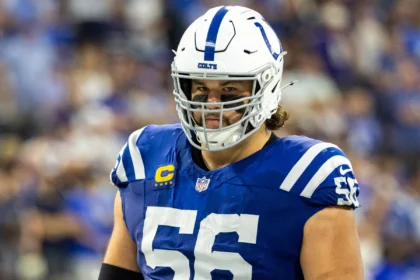
Indianapolis sent eight-time Pro Bowl guard Quenton Nelson to the Seattle Seahawks. The Colts received a 2027 third-round pick and a 2028 fifth-round pick in return.
Soon afterward, defensive lineman DeForest Buckner also moved to the San Francisco 49ers. Indianapolis received a fourth-round pick in the 2027 NFL Draft for him.
Other notable trades had already taken place. The Houston Texans acquired wide receiver Marvin Harrison Jr. from the Arizona Cardinals, while the Dallas Cowboys landed cornerback Joey Porter Jr. from Pittsburgh.
The different moves clearly show how franchises are assessing their situations.
While some teams are targeting established playmakers, others are investing more heavily in the future.
Could Jonathan Taylor be on the move, too?

NFL fans are watching Indianapolis closely right now.
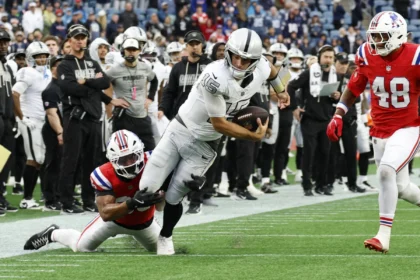
After the departures of Nelson and Buckner, running back Jonathan Taylor could be another high-profile player to leave the Colts.
According to NFL Network, the Colts are open to discussing a trade. Several teams are reportedly interested. The Denver Broncos, Green Bay Packers, and Minnesota Vikings have all been mentioned as potential suitors.
A trade involving Taylor has not been confirmed, however. It remains to be seen whether Indianapolis receives an offer it likes.
It’s situations like this that make the days leading up to the deadline so exciting. A single high-profile trade could change the outlook for several playoff contenders.
What happens after the NFL trade deadline?
Once the trade deadline passes, teams will have most of their rosters set for the rest of the season. They will no longer be able to add players via trade.
That does not mean players can no longer change teams.
Teams can still sign players who are not under contract and release players from their rosters. The waiver system plays an important role in that process.
Through the waiver wire, other NFL teams can claim a player who has been released. If multiple franchises submit a claim, the waiver priority determines which team gets the player.
Starting November 11, 2026, this process generally also applies to experienced players with at least four accrued NFL seasons who, if released before the deadline, would normally have become free agents immediately.
If no other team claims a player off waivers, he can then sign a new contract as a free agent.
The trade deadline remains a particularly important turning point for team decision-makers.
The Los Angeles Rams are a notable example from the past. In November 2021, they acquired pass rusher Von Miller from the Denver Broncos. Just a few months later, Los Angeles won Super Bowl LVI, with Miller playing an important role.
However, not every trade is automatically a success. A newcomer has to adjust to a different playbook, new teammates, and often an entirely different role on the field.
And paying a high price in future draft picks can make long-term roster planning more difficult.
The NFL trade deadline is therefore a balancing act between short-term title hopes and long-term success.
The final decisions come on November 10, 2026, at 10:00 p.m. CET. Then it will be clear which franchises made another push to improve their rosters and which teams are looking to the future with additional draft picks.
Um diese Spieler geht es im Artikel.

Noch Fragen zum Artikel?
Wähle eine Frage aus - die Antwort basiert auf Artikel und verlinktem FootballR-Kontext.
FAQ zum Thema
Wann ist die NFL Trade Deadline 2026?
Die NFL Trade Deadline 2026 ist am Dienstag, 10. November, um 22:00 Uhr MEZ. In den USA ist es dann 16:00 Uhr Eastern Time.
Welche Trades sind vor der NFL Trade Deadline 2026 bereits abgeschlossen?
Zu den bereits gemeldeten Deals gehören Jeffery Simmons zu den Chicago Bears, Quenton Nelson zu den Seattle Seahawks und DeForest Buckner zu den San Francisco 49ers. Außerdem wechselten Marvin Harrison Jr. zu den Houston Texans und Joey Porter Jr. zu den Dallas Cowboys.
Was erhielten die Titans für Jeffery Simmons von den Bears?
Tennessee erhielt zwei Erstrundenpicks, für die Drafts 2027 und 2028, sowie einen Viertrundenpick für 2027. Chicago bekam neben Simmons einen Fünftrundenpick für 2028.
Was passiert nach der NFL Trade Deadline?
Nach Ablauf der Deadline sind Trades zwischen NFL-Teams nicht mehr erlaubt. Die nächste Möglichkeit dafür öffnet sich mit Beginn des neuen Ligajahres im März; Free Agents und entlassene Spieler unterliegen anderen Regeln.
Wie funktionieren Trades in der NFL?
Teams können Spieler gegen andere Spieler, künftige Draftpicks oder eine Kombination daraus tauschen. Dabei müssen sie auch Gehaltsverpflichtungen und den Salary Cap berücksichtigen.